Machine Learning Infrastructure
Choosing the Right Feature Store in 2025/2026
With real-time AI taking over personalization, fraud detection, and predictive maintenance, your feature store will either accelerate model velocity or bottleneck innovation. Here’s how to choose wisely in 2025 and beyond.
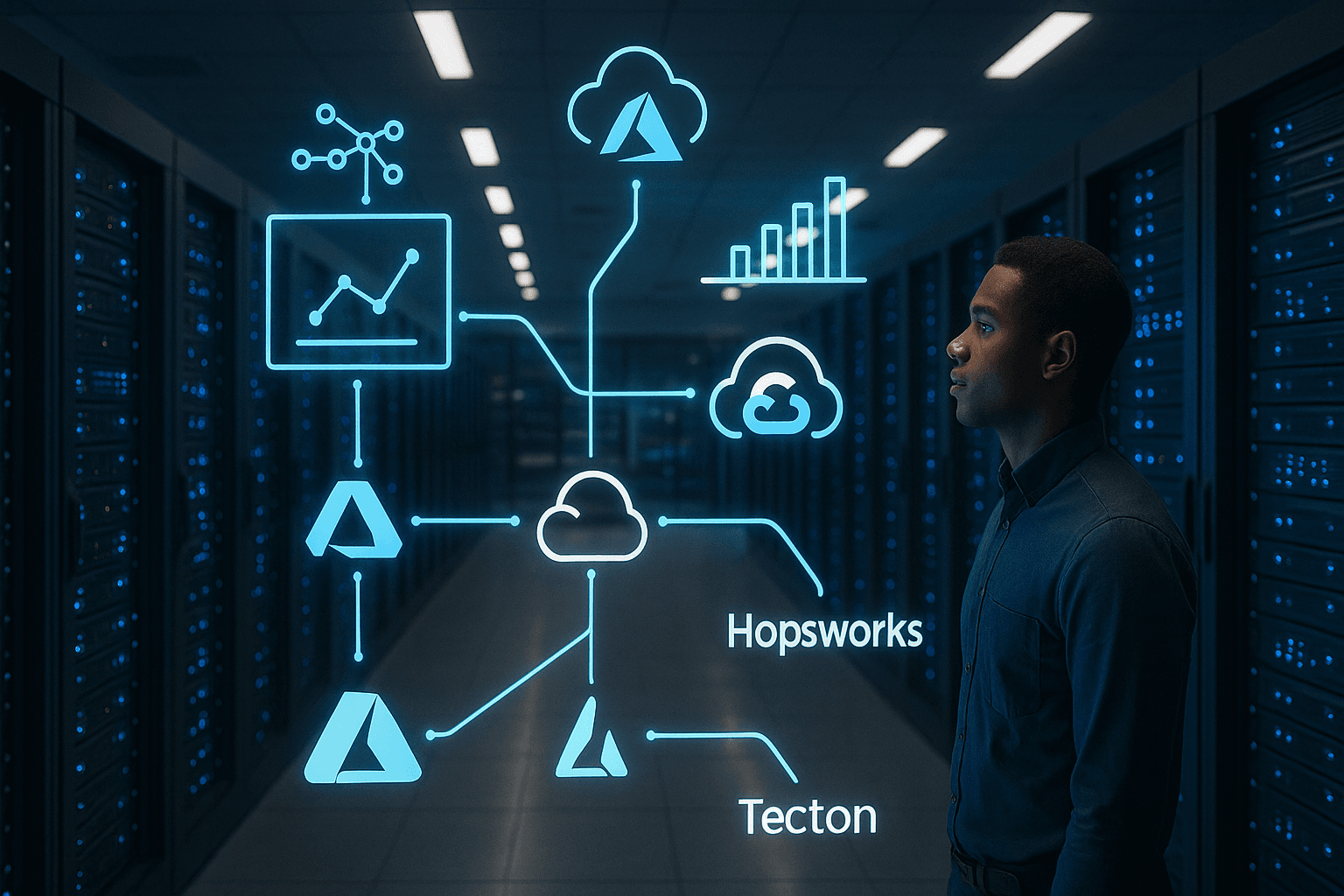
2025/2026 Guide to Feature Stores: Strategy, Scale, and Success
Why Feature Stores Now Sit at the Center of AI Strategy
In an era of high-frequency AI deployments, models trained today might be serving millions of inferences tomorrow. Whether you're detecting credit card fraud in under 30ms or tuning recommendation engines in real-time, the feature store determines how reliable—and reusable—your signals are.
As enterprises scale AI across domains, they need a system of record for features—a central source of clean, versioned, and consistent inputs. In 2025/2026, a feature store isn’t just a data tool—it’s an operating system for ML.
What Changed Between 2023 and Now
The evolution of feature stores has shifted from "data engineer’s side tool" to “ML team’s collaboration hub.” Today's leading platforms offer:
- Online + offline parity
- Push-button feature serving APIs
- Lineage tracking for explainability
- Multi-cloud or hybrid deployments
- Built-in validation, drift detection, and role-based access control
That means teams across finance, healthcare, e-commerce, and manufacturing are no longer asking if they need a feature store—but which one will keep up with their ML velocity.
What to Consider When Choosing in 2025/2026
- Real-Time Performance: Can it serve latency-sensitive models under 100ms?
- Backfill and Replay Support: Can you reprocess historical data with consistent logic?
- Cloud Strategy Alignment: Does it work well with your stack—GCP, AWS, Azure, Snowflake?
- Security & Auditability: Does it support RBAC, PII masking, and audit trails for compliance needs?
If your org is scaling hundreds of models across markets or business units, multi-tenant capabilities and governance will be essential. Meanwhile, smaller teams may prefer open-source options like Feast with limited ops overhead.
Where the Market is Heading (2026 Outlook)
Expect the rise of feature marketplaces inside enterprises—catalogs of reusable features searchable across business domains. This trend is already emerging with tools like Tecton, Rasgo, and Hopsworks, and we expect tighter integration with semantic layer tools (like dbt + Metric Layer) by late 2026.
Feature stores will also become more integrated with vector databases to support hybrid AI systems—where tabular features meet embeddings from multimodal models.
Microcorem’s Take
At Microcorem, we help teams integrate feature stores that match their AI maturity. From designing custom online/offline stores for latency-critical healthcare models, to configuring Feast + Airflow stacks for resource-constrained teams, our goal is to make your ML workflows reliable, shareable, and fast.
Further Reading & Web Resources
- Tecton 2025 Buyer’s Guide to Feature Stores
- Feast: Open-source Feature Store
- AWS Feature Store (SageMaker)
- MLOps Community Comparison Table
- Databricks Feature Engineering & Unity Catalog
- Hopsworks Feature Store for GCP
- Vertex AI Feature Store (GCP)
Build Your First Reliable AI Agent System
Move beyond AI experiments. Microcorem helps organisations design agentic workflows, retrieval systems, evaluation pipelines, and production-ready LLM applications.